




Restrictive Housing and the Management of Disruptive Behaviors

2 Hours | 2 CEs
This on-demand professional training program on Restrictive Housing and the Management of Disruptive Behaviors is presented by Ashley Batastini, PhD.
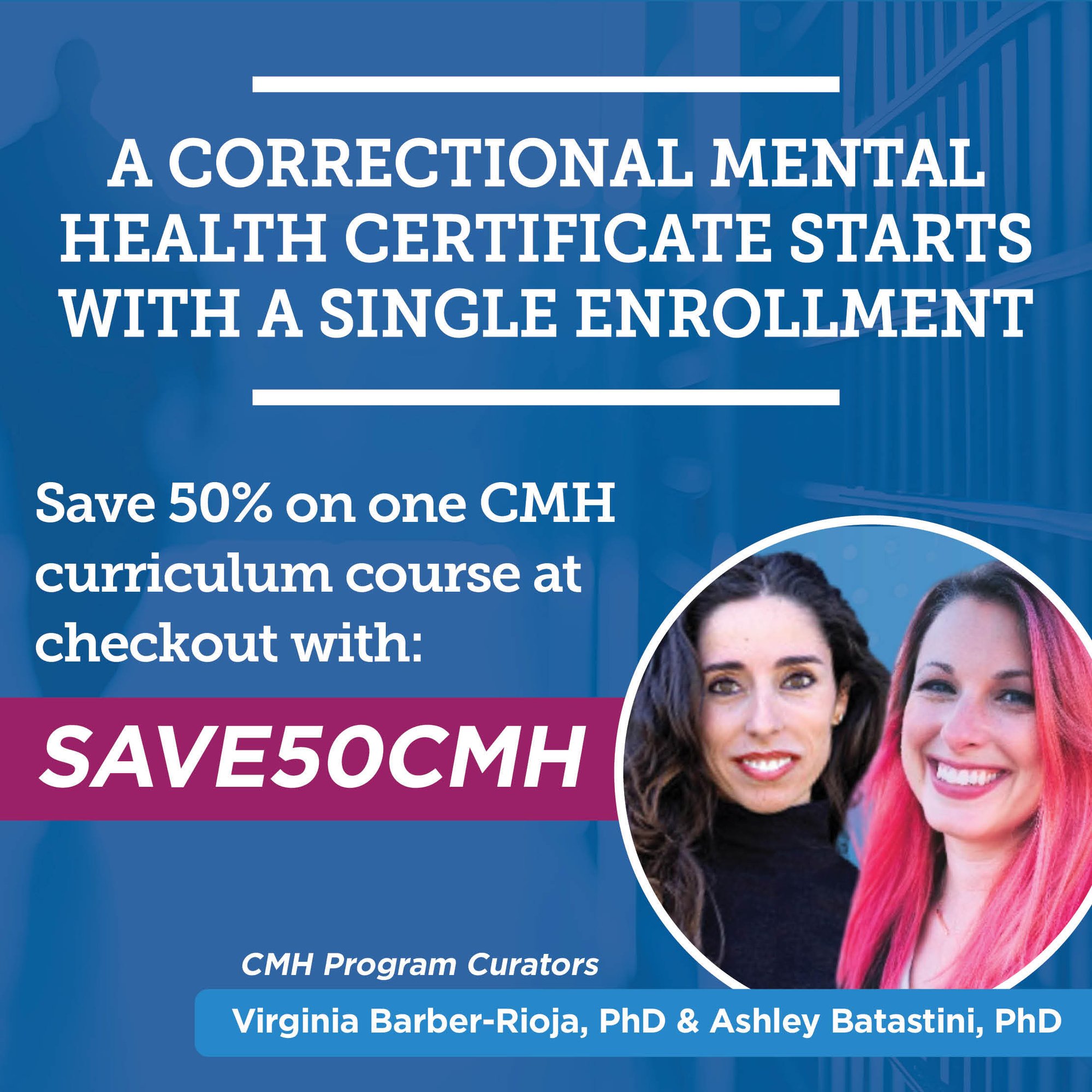
This badge-earning program can be shared digitally on platforms like LinkedIn or your resume and counts towards a certificate. Enroll in this program to earn credit towards the Correctional Mental Health Certificate and share your new digital credentials with prospective employers and colleagues.
The use of restrictive housing, or segregation, to contain high-risk and disruptive behavior in correctional institutions has become an overused and controversial practice. This program discusses the historical origins of restrictive housing, its intended functions, and unintended consequences from an empirical and ethical standpoint. We take a critical look at the scientific and legal debates surrounding the psychological harms associated with restrictive housing placements, including for those with pre-existing mental health issues.
The program closes with an overview of reform trends that aim to reduce the frequency and duration of restrictive housing, with an emphasis on alternative approaches to behavior management that more appropriately and humanely balance rehabilitation and safety goals. Evidence on program efficacy and limitations to implementation is reviewed. This program is geared toward mental health and other allied professionals at all levels of training who work in carceral settings or with clients involved in the criminal justice system.
Program Outline:
- Historical Overview and Purpose: Discuss the origins and intended functions of restrictive housing in correctional institutions, highlighting the reasons it has become a prevalent yet controversial practice.
- Psychological and Legal Concerns: Examine the debates on the psychological harms caused by restrictive housing, especially for individuals with pre-existing mental health conditions, and explore the associated legal implications.
- Reform Trends and Alternative Approaches: Review recent trends aiming to decrease the use of restrictive housing, focusing on alternative behavior management strategies that better align with rehabilitation and safety goals.

Intended Audience
This on-demand professional training program is intended for mental health and other allied professionals

Experience Level
This on-demand professional training program is appropriate for beginner, intermediate, and advanced level clinicians.

CE / CPD Credit
APA, ASWB, CPA, NBCC Click here for state and other regional board approvals.
Learning Objectives
Upon completion of this program you will be able to:

Describe the historical origins and intended uses of various forms of restrictive housing for managing disruptive behaviors in institutional settings
Describe the ethical and psychological implications of restrictive housing, particularly in relation to individuals with mental health issues
Describe current policy reforms and alternative therapeutic approaches for managing disruptive behaviors that rely less on behavioral containment

Presented By
Ashley Batastini, PhD
Ashley Batastini is an Associate Professor in the Centre for Forensic Behavioural Science at Swinburne University of Technology. She earned her Ph.D. in Counseling Psychology at Texas Tech University in the United States in 2015. Her work focuses on developing novel intervention strategies for highe...
Curriculum
1. Historical Overview and Purposes
2. Psychological and Legal Concerns
3. Reform Trends and Alternative Approaches
4. Treatment Directions
5. Assessment Developments
6. Unresolved Needs and Closing Questions
Develop a Specialty Area of Practice
Transforming mental health professionals into experts

Expert Instructors
Professional training developed and delivered by the field's leading experts

CE Credit
Earn CE credit for meaningful professional training that will elevate your practice

Convenience & Flexibility
Learn at your own pace, from wherever you might be!