



Considerations for Correctional Mental Health in Rural Areas

1 Hour | 1 CE
This on-demand professional training program on Considerations for Correctional Mental Health in Rural Areas is presented by Tamara Kang, PhD.
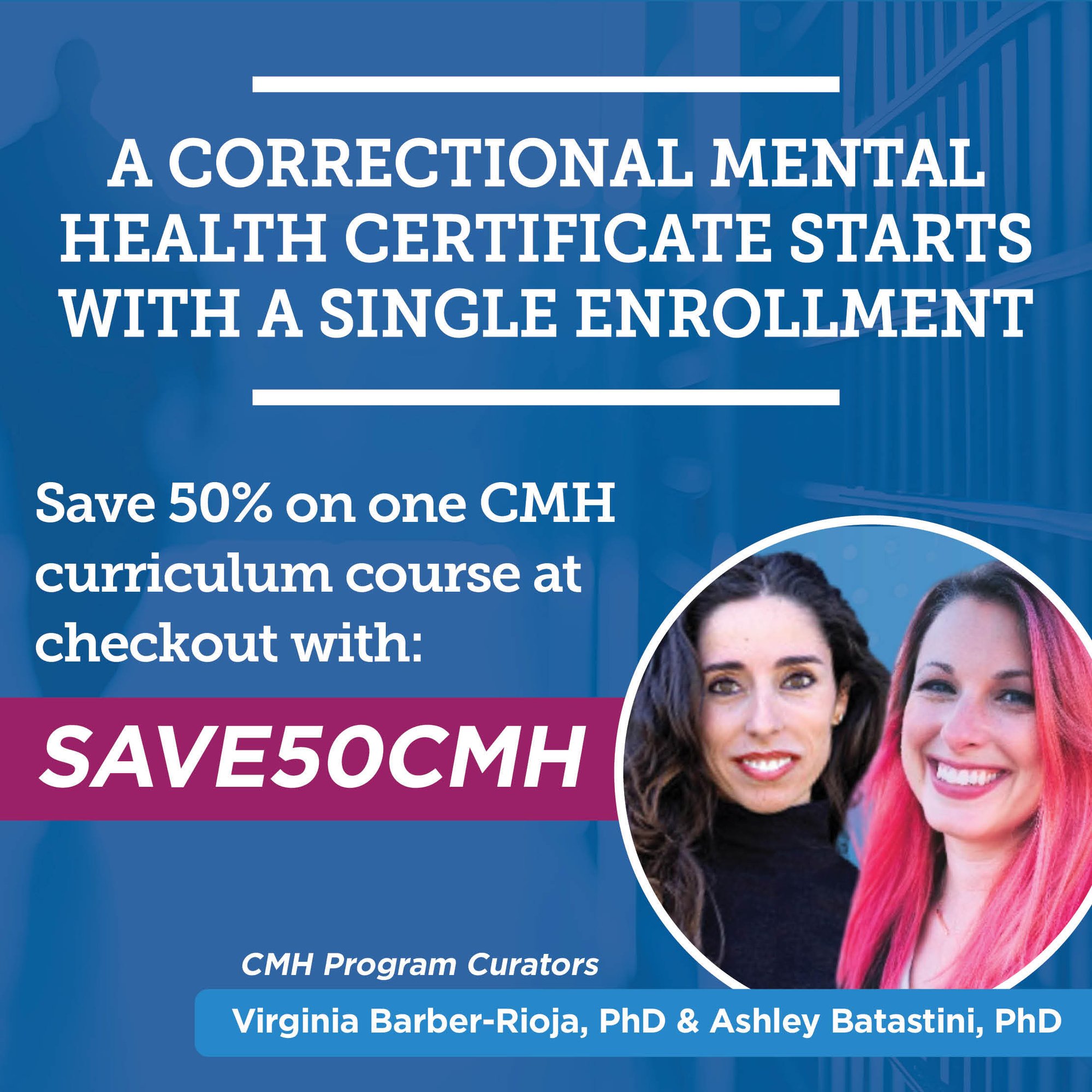
This badge-earning program can be shared digitally on platforms like LinkedIn or your resume and counts towards a certificate. Enroll in this program to earn credit towards the Correctional Mental Health Certificate and share your new digital credentials with prospective employers and colleagues.
In rural areas, providing interventions to all persons under corrections or community corrections supervision is complicated by the limited infrastructural supports inherent to rurality. When the person also has mental health needs, they face additional barriers, such as limited mental health service options and inadequate community knowledge of what mental health services are available and how they work. Often, rurality contributes to reluctance to disclose mental health problems for fear of stigmatization due to the tight-knit nature of rural communities, which can fuel self-stigma and result in nonadherence to treatment and medication. On the other side of the coin, rural providers tirelessly work to provide quality services while being given minimal resources and juggling large caseloads.
This program focuses on: (1) providing quality services in corrections while also managing large caseloads, minimal resources, and provider burnout and fatigue, and (2) providing services to persons under corrections or community corrections supervision as they navigate the limited infrastructural supports, such as scarcity of employment opportunities, the proportion of agricultural land limits available housing, no public transportation, widespread inaccessibility to services, and limited access to modern technology.
Given that the field has historically relied on resource-dependent interventions, which require infrastructural supports that rural areas do not have, the program concludes with case examples that fosters discussion about how to offer quality services when the reality is understaffing and minimal resources, which then often translates into provider burnout, frustration, fear (e.g., not enough staff to handle violence), and belief that recovery is impossible.
This program is designed for mental health providers and allied professionals working in corrections or community corrections settings, including correctional facilities, inpatient mental health facilities, or as community providers serving justice-involved individuals on probation or parole. Ideal participants include those specializing in forensic or correctional mental health, substance abuse counseling, or healthcare roles like physicians or physician assistants who frequently address the mental health needs of justice-involved populations, including cases involving mental illness and violence.
Program Outline
- Challenges for the rural provider in corrections vs. community corrections
- Challenges and barriers for the justice-involved person with mental health needs
- Innovative solutions in rural communities
- Discussion of case studies and provider experiences with treatment delivery in rural communities
- Presentation of solutions that other rural counties have successfully adopted to facilitate adherence to treatment and medication while also supporting and acknowledging the lived reality for rural providers
- Impact of abuse on child’s development
- Assessment of provider burnout
- Discussion of strategies to manage and support provider mental health (e.g., rural providers often experience fear, frustration, and belief that recovery is impossible given the infrastructural limitations are the reality)"

Intended Audience
This on-demand professional training program is intended for mental health and other allied professionals

Experience Level
This on-demand professional training program is appropriate for beginner, intermediate, and advanced level clinicians.

CE / CPD Credit
APA, ASWB, CPA, NBCC Click here for state and other regional board approvals.
Learning Objectives
Upon completion of this program you will be able to:

Describe the rural-specific, infrastructural barriers to delivery of quality services and treatment adherence for persons in corrections and community corrections
Describe practical strategies to overcome the limited infrastructural supports inherent to rural areas without compromising the delivery of quality services for persons with mental health needs under corrections or community corrections supervision

Presented By
Tamara Kang, PhD
Tamara Kang received her M.A. in Clinical Psychology, Ph.D. in Legal Psychology, and Quantitative Certificate from The University of Texas at El Paso. She is currently an Assistant Professor in the School of Psychological & Behavioral Sciences at Southern Illinois University Carbondale. She was awar...
Curriculum
1. What Works
2. How Do We Rethink 'What Works'?
3. Innovative Solutions in Rural Communities
4. Case Studies and Provider Experiences with Treatment Delivery in Rural Communities
5. Provider Mental Health
Develop a Specialty Area of Practice
Transforming mental health professionals into experts

Expert Instructors
Professional training developed and delivered by the field's leading experts

CE Credit
Earn CE credit for meaningful professional training that will elevate your practice

Convenience & Flexibility
Learn at your own pace, from wherever you might be!