

AAFP: DSM-5-TR Revisions and Implications for Forensic Practice
.png)
6 hours | 6 CEs
This on-demand professional training program on DSM-5-TR: Key Revisions and Implications for Forensic Practice is presented by Tracy Thomas, PhD, ABPP (Forensic) in partnership with the American Academy of Forensic
Psychology (AAFP).
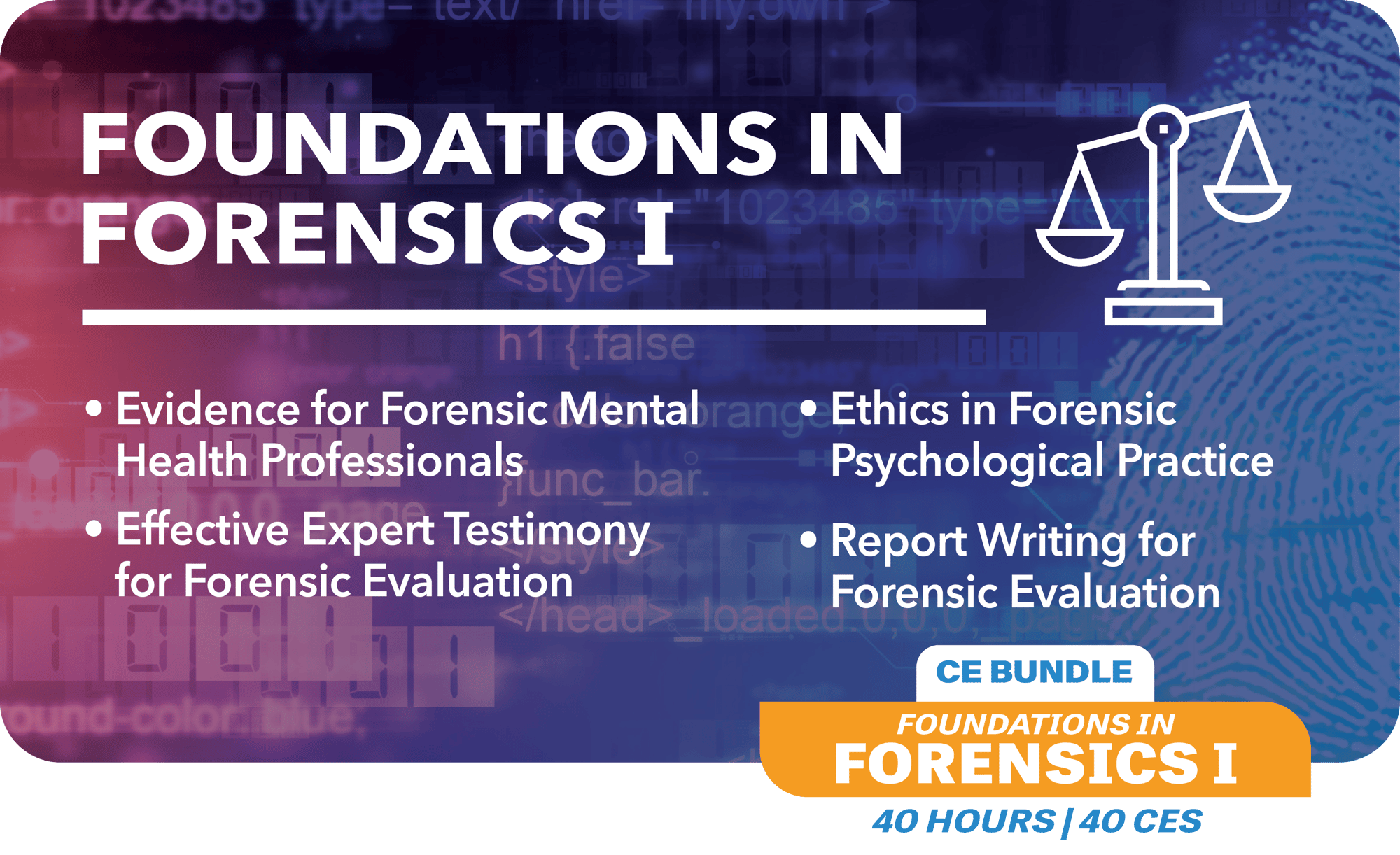
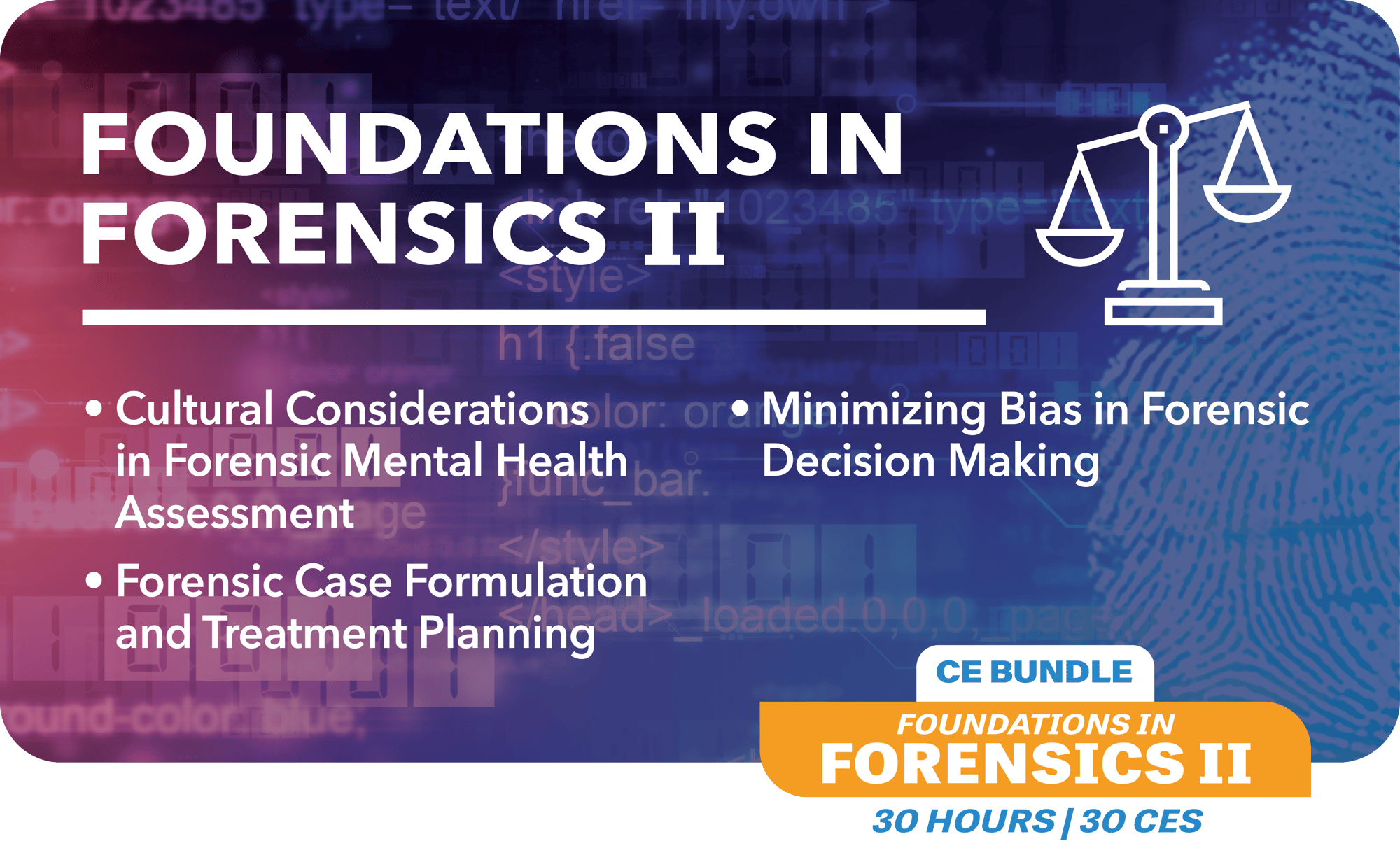
This badge-earning program can be shared digitally on platforms like LinkedIn or your resume and counts towards various certificates. Enroll to earn credit and share your new digital credentials with prospective employers and colleagues. This program counts as a foundational program in the certificates:
This program reviews key changes from the DSM-5 to the DSM-5-TR relevant to forensic psychological practice. This session also includes education and practice on distinct models of case conceptualization, issues surrounding the DSM and diagnosis, and methods of effectively communicating diagnostic information.
This program addresses the increased attention to culture, racism, and discrimination in the DSM-5-TR. The impact of culture, racism, and discrimination on (1) symptom presentation, (2) attribution and understanding of the cause of psychological disorders, and (3) variations in disorder prevalence across person groups and classes. Participants are provided with both didactic training and practice via case examples.
This program focuses in many regards on applying DSM-5-TR to forensic psychological work but are also relevant to general mental health practitioners and applied clinical and clinical forensic settings.
*Each section will tie back to forensic psychological practice; will not focus on therapeutic practice.*
This program moves beyond the DSM-5-TR to deepen participants' understanding of trauma, distinguishing Type I and Type II trauma, reviewing Adverse Childhood Experiences (ACEs), and examining the ICD-11 framework for Complex PTSD and its differential diagnosis. Participants will also explore mechanisms of harm and the critical role of sociocultural context—including racial, institutional, and intergenerational trauma—in trauma-informed assessment and formulation.
This program is intended for early-career mental health professionals. It is also appropriate for mid- and later-career mental health professionals who are interested in an overview of key changes from DSM-5 to DSM-5-TR.

Intended Audience
This on-demand professional training program is intended for mental health and other allied professionals

Experience Level
This on-demand professional training program is appropriate for beginner, intermediate, and advanced level clinicians.

CE / CPD Credit
APA, ASWB, CPA, NBCC Click here for state and other regional board approvals.
Learning Objectives
Upon completion of this program you will be able to:

Describe how to develop a plan for incorporating DSM-5-TR updates into their forensic psychological practice
Describe the knowledge and skills necessary to explain DSM-5-TR updates in plain language accessible to courts, attorneys, and other consumers of forensic psychological work products
Describe how to incorporate issues of culture, racism, and discrimination into forensic psychological assessment, diagnosis, and psycho-legal opinions
Describe the ICD-11 criteria for Complex PTSD, and apply trauma-informed, socioculturally responsive principles to assessment and differential diagnosis

Presented By
Tracy Thomas, Ph.D., ABPP (Forensic)
Dr. Thomas has been Board Certified in Forensic Psychology by the American Board of Forensic Psychology since 2015. She maintains a full-time forensic psychology practice, providing forensic evaluation and consultation in a variety of criminal and civil matters. Dr. Thomas received her Ph.D. in clin...
Curriculum
1. Key DSM-5-TR Revisions: Diagnostic, Legal, and Cultural Considerations
2. DSM-5 Fact Sheets
3. Case Examples
4. DSM-5-TR in Practice: Purpose and Effective Communication of Diagnoses
5. Beyond the DSM-5
Develop a Specialty Area of Practice
Transforming mental health professionals into experts

Expert Instructors
Professional training developed and delivered by the field's leading experts

CE Credit
Earn CE credit for meaningful professional training that will elevate your practice

Convenience & Flexibility
Learn at your own pace, from wherever you might be!
Program Partner
American Academy of Forensic Psychology
We are proud to partner with the American Academy of Forensic Psychology (AAFP) for this training. AAFP is a non-profit organization of board-certified forensic psychologists whose mission is to contribute to the development and maintenance of forensic psychology as a specialized field of study, research, and practice. The Academy does this by providing high-quality continuing education workshops, providing a forum for the exchange of scientific information among its members, and conferring awards upon outstanding students and practitioners in the field of forensic psychology.