


AAFP: Advanced Topics in Competency Assessment Part 3: Complications, Predicting Restoration, and Report Writing

3 Hours | 3 CEs
This on-demand professional training program on Advanced Topics in the Assessment of Competency to Stand Trial - Part 3: Complications, Predicting Restoration, and Report Writing is presented by Terry Kukor, PhD., ABPP, and Lori L. Hauser, PhD., ABPP in partnership with the American Academy of Forensic Psychology (AAFP).
This training is part 3 of the three-part series on Assessment of Competency to Stand Trial. This training continues to focus on factors that are seldom addressed in competency assessment training. Assessments of competency can be complicated by issues such as the shelf-life or qualified nature of our competency opinions, differentiating ability from capacity (and both from willingness), and other unique presenting factors (e.g., amnesia, substance use, language/culture, etc.) or specific questions (e.g., waiving various rights).
When opining that an examinee is incompetent, courts typically expect an opinion about restorability. To this end, we emphasize the acquisition and careful consideration of data points most relevant to the restoration issue. Lastly, efficient and effective report-writing is discussed, emphasizing a model that maximizes objectivity as well as data relevance and necessity.
Participants are strongly encouraged to complete Part 1 and Part 2 training before registering for this training. Register for both programs below.
Program outline:
There are three broad topical areas, each covered by presenting relevant content brought to life with case examples.
- Restoration – data points most relevant to forming an opinion on restorability.
- Complications in competency assessment – shelf-life or qualified nature of competency opinions, differentiating ability from capacity from willingness, and other unique presenting factors or specific questions.
- Report writing – strategies to maximize objectivity, relevancy, and necessity of data.

Intended Audience
This on-demand professional training program is intended for mental health and other allied professionals

Experience Level
This on-demand professional training program is appropriate for beginner, intermediate, and advanced level clinicians.

CE / CPD Credit
APA, ASWB, CPA, NBCC Click here for state and other regional board approvals.
Learning Objectives
Upon completion of this program you will be able to:

Describe at least three complicating factors – and possible remedies – in competency assessments
Describe three factors that best predict the likelihood of restoration
Describe report-writing strategies that maximize objectivity, data relevance, and necessity

Presented By
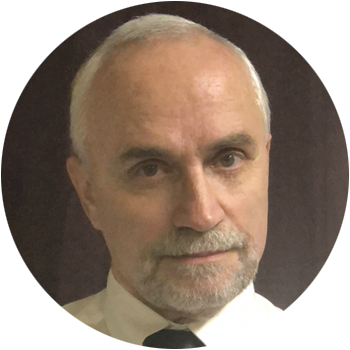
Terry Kukor, PhD, ABPP (Forensic)
Terry Kukor, Ph.D., ABPP, is board-certified in forensic psychology, and is a Senior Forensic Psychologist at the Netcare Forensic Center. Dr. Kukor has specialized in criminal forensic evaluation for more than 30 years, during which time he has also done violence risk and threat assessment. He teac...
Presented By
Lori L. Hauser, PhD, ABPP
Lori L. Hauser, PhD, ABPP, is a board-certified forensic psychologist employed at Whiting Forensic Hospital in Middletown, Connecticut. There, she oversees the competency restoration service and conducts forensic evaluations – competency, as well as general and sexual violence risk management – for ...
Curriculum
1. Introduction & Core Challenges in Competency Evaluations
2. Acute, Co-Occurring, and Special Clinical States
3. Pro Se Competence & Decision-Making Rights
4. Predicting Restorability
5. Report Writing – Developing & Communicating the Opinion
6. Advanced Report Formats & Opinion Structure
Develop a Specialty Area of Practice
Transforming mental health professionals into experts

Expert Instructors
Professional training developed and delivered by the field's leading experts

CE Credit
Earn CE credit for meaningful professional training that will elevate your practice

Convenience & Flexibility
Learn at your own pace, from wherever you might be!
Program Partner
American Academy of Forensic Psychology
We are proud to partner with the American Academy of Forensic Psychology (AAFP) for this training. AAFP is a non-profit organization of board-certified forensic psychologists whose mission is to contribute to the development and maintenance of forensic psychology as a specialized field of study, research, and practice. The Academy does this by providing high-quality continuing education workshops, providing a forum for the exchange of scientific information among its members, and conferring awards upon outstanding students and practitioners in the field of forensic psychology.